This entry was posted on May 30 2026.
Most hot tub and swim spa owners keep a close eye on their water during summer. And understandably so! More guests, more frequent use, and more heat. But spring is actually the more critical transition window, and it begins earlier than many owners expect. Understanding why can save you from cloudy water, chemistry headaches, and the kind of problems that turn a relaxing soak into a troubleshooting session.
Winter Was Quietly Working in Your Favor
Before we talk about what spring does to your water, it's worth appreciating what winter did for it.
Cold ambient temperatures slow the rate at which sanitizers like chlorine and bromine decompose, which means your chemical levels hold more steadily between tests. Reduced evaporation also means less pH drift. But the biggest factor is behavioral, and most owners have never thought about it.
In winter, people dress to reach the tub. That means shoes or boots all the way to the edge, a towel thrown over the step, and a quick transition into the water. Compare that to spring and summer, when people walk barefoot across a lawn, sit on outdoor furniture, and apply sunscreen before climbing in.
That behavioral shift matters more than most people realize. Bare feet track in soil, lawn chemicals, grass clippings, and biological material. Sunscreen and insect repellent are among the most significant sources of organic load in hot tub and swim spa water—they create a chemical demand that consumes sanitizer without any visible evidence of contamination. In winter, most of that simply doesn't enter the equation.
The result: your water has been operating in a relatively clean, stable environment for three to four months. That's the good news.
Spring Introduces a New Chemical Equation
The challenge with spring isn't any single factor; it's that multiple variables shift simultaneously, and they compound each other.
Bather Load Changes
As the weather warms, bare feet return. So do sunscreen, insect repellent, and the increased organic material that comes with outdoor living. Your current sanitizer balance was calibrated for a winter bather load. It wasn't designed for what spring brings, and it will need to be recalibrated accordingly.
Pollen Season Begins
In most U.S. regions, late March and early April mark the onset of tree and grass pollen season. This matters more than most owners expect. Pollen is an organic compound, and when it enters your water—which happens every time you open the cover during peak pollen periods—it creates a chlorine or bromine demand. Your sanitizer levels can drop noticeably without any corresponding increase in bather load or visible contamination.
The fix isn't complicated, but you have to know it's happening. Testing more frequently during pollen season and adjusting your shock dosage accordingly will keep you ahead of it.
Sanitizer Efficiency Drops with Warmer Water
Chlorine decomposes faster at higher temperatures. Water at 104°F consumes chlorine significantly faster than water at 96°F. As spring arrives and ambient temperatures rise, a sanitizer level that held comfortably steady all winter may now be dropping faster than your twice-weekly testing schedule catches.
Cover-Off Time Increases
As the weather turns inviting, lids come off more often and stay off longer—exactly when environmental contaminants like pollen, dust, and airborne debris are at their peak. It's not a reason to use your spa less, but it is a reason to test more frequently and shock more intentionally after longer open-air sessions.
What to Do About It: The Spring Water Reset
The goal isn't a complicated overhaul. It's a deliberate recalibration that takes about an hour and sets you up for the entire spring and early summer.
Step 1: Test First, Before Anything Else Changes
Before you adjust a thing, get a complete baseline reading. Test free chlorine or bromine, pH, total alkalinity, and calcium hardness. This tells you where your water actually stands coming out of winter, not where you assume it stands.
If you haven't tested in the past two weeks, test today.
Step 2: Decide Whether to Drain and Refill
Water in your hot tub or swim spa should generally be changed every 3–4 months under normal use. If your last full water change was in November or December, spring puts you squarely in that window.
A full drain and refill gives you the cleanest possible foundation for spring. It also eliminates the accumulated total dissolved solids (TDS) that build up over a season of heavy use. Dissolved solids that reduce your water's ability to hold a chemical balance even when you're adding the right products in the right amounts.
You can estimate your recommended water change interval with the Drain Interval Formula: divide your spa's volume in gallons by 3, then divide by the average number of daily bathers. The result is the approximate number of days between recommended water changes.
Step 3: Rebalance in the Correct Sequence
This is where many owners lose time and product. The sequence matters more than you might think, because chemistry adjustments made out of order create a feedback loop that makes each correction less effective.
Always adjust in this order:
- Total Alkalinity: Target 100–120 ppm (TA acts as a buffer for pH; always adjust this first).
- pH: Target 7.4–7.6 (only stabilizes properly once TA is in range).
- Sanitizer: Target 1.5–3 ppm for chlorine, 2–4 ppm for bromine.
- Calcium Hardness: Target 150–250 ppm (high calcium causes scaling on surfaces and equipment).
Allow full circulation between each adjustment (at least 30 minutes) before testing again.
Step 4: Increase Testing Frequency Through the Transition
Standard practice is testing two to three times per week. Through the spring transition (roughly late March through the end of April in most U.S. regions), test every other day until your water stabilizes at its new equilibrium. Once levels are holding consistently, return to your normal schedule.
Step 5: Shock After the First Full Spring Soak
After your first open-air spring soak—especially one involving barefoot guests, sunscreen, or outdoor exposure—add a non-chlorine oxidizing shock. This helps oxidize the organic load before it creates chloramines (the combined chlorine compounds responsible for that harsh chemical odor) or affects water clarity.
Make this a standard practice after any soak with a higher-than-usual bather load throughout spring and summer.
A Note on Your Water Care Supplies
The quality of your spring reset depends on the quality of what you're working with. Test strips have a shelf life; exposure to humidity, direct sunlight, or temperatures above 85°F degrades their accuracy, sometimes significantly. If your strips have been sitting in the cabinet since last fall, replace them before you run your spring baseline test.
The same goes for chemicals. Granular chlorine and shock products stored in humid environments lose potency over time. If your sanitizer isn't holding at expected levels despite proper dosing, the product itself may be the variable.
Starting the season with a fresh set of supplies isn't just a purchase; it's an investment in accuracy.
The Bottom Line
Your water doesn't care what season it is, but it responds to inputs. What goes into it, how it's treated, and how consistently it's maintained matter. Spring changes those inputs significantly, and the owners who understand why are the ones who spend their spring evenings actually relaxing, not troubleshooting.
A one-hour spring reset pays dividends from now through August.
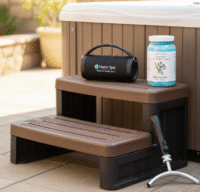
Master Spa Parts carries everything you need for a complete spring water reset: test strips, sanitizers, balancers, and shock products for the maintenance demands real hot tub and swim spa owners actually face.